

Sustainable Agriculture in 2025: Trends, Technologies, and WIL Prime Global's Approach
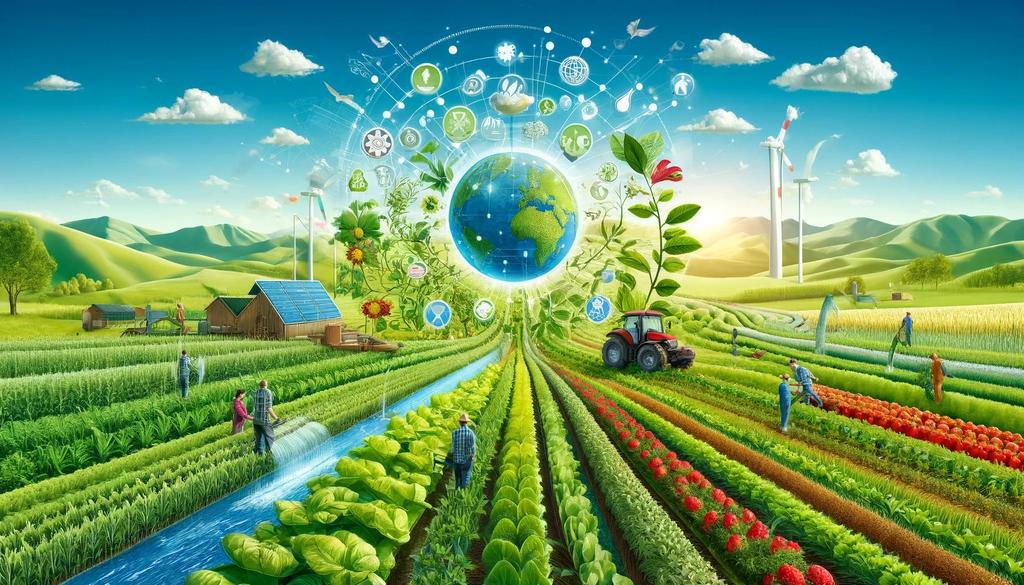
Sustainable Agriculture in 2025: Trends, Technologies, and WIL Prime Global’s Approach
In 2025, the global agricultural landscape is undergoing a profound transformation. As climate change, population growth, and food security challenges intensify, sustainable agriculture has become more than a trend—it's a necessity. At WIL Prime Global Ltd., we recognize the urgent need to produce more with less, protect our ecosystems, and build resilient food systems that serve both people and the planet.
🌾 What Is Sustainable Agriculture?
Sustainable agriculture is the practice of farming that meets current food needs without compromising the ability of future generations to meet theirs. It balances productivity with environmental stewardship, economic viability, and social responsibility.
At WIL Prime Global, we define it as a regenerative approach to agriculture, integrating advanced technologies, local knowledge, and sustainable practices across our farming operations.
🔍 Top Trends Shaping Sustainable Agriculture in 2025
1. Regenerative Farming Practices
Soil health is now a top priority. Practices like cover cropping, no-till farming, and crop rotation are being widely adopted to increase biodiversity, improve water retention, and capture carbon from the atmosphere.
2. Precision Agriculture
With the help of drones, AI, and satellite imagery, farmers can now monitor soil moisture, nutrient levels, and crop health with pinpoint accuracy. This allows for reduced input waste and higher yield efficiency—saving money and protecting the environment.
3. Vertical and Urban Farming
As arable land shrinks and urbanization rises, controlled-environment agriculture (CEA) systems like vertical farms are producing fresh food in the heart of cities using 90% less water and minimal land.
4. Sustainable Water Management
Smart irrigation systems, drip technologies, and AI-driven weather prediction tools are helping farmers conserve water and manage droughts more effectively.
5. Climate-Resilient Crops
Thanks to biotechnology and research, drought-tolerant, pest-resistant, and fast-growing crops are becoming standard in many regions—offering food security in unpredictable climates.
🌱 WIL Prime Global’s Approach to Sustainable Agriculture
At WIL Prime Global, we don’t just follow trends—we lead with purpose. Our agricultural division is built on a foundation of innovation, ethics, and sustainability.
Here’s how we’re making an impact:
✅ Smart Farming Technologies
We’ve integrated IoT sensors, precision mapping, and data analytics into our farms to monitor crop conditions and optimize inputs like fertilizers and pesticides—reducing waste by over 30%.
✅ Community Engagement
We collaborate with local farmers and cooperatives to train them in sustainable methods, ensuring knowledge-sharing and community empowerment across our regions of operation.
✅ Sustainable Supply Chains
From seed to harvest to distribution, we ensure every part of our agricultural value chain meets strict environmental and social standards.
✅ Investing in Research & Development
We are actively funding R&D projects focused on organic alternatives, regenerative techniques, and future-ready crops. Our goal? To feed the future—sustainably.
🌍 Why It Matters Now More Than Ever
According to the UN, food production will need to increase by 60% by 2050 to feed the world. But doing so conventionally would exacerbate deforestation, water scarcity, and emissions. The only viable path forward is sustainable agriculture—and it starts today.
WIL Prime Global is proud to be at the forefront of this agricultural evolution. We believe that feeding the world shouldn't cost the Earth.
📌 Conclusion
Sustainable agriculture in 2025 is a powerful fusion of technology, tradition, and ethics. By embracing this approach, WIL Prime Global is creating long-term value—not just for our shareholders, but for our farmers, communities, and the planet itself.